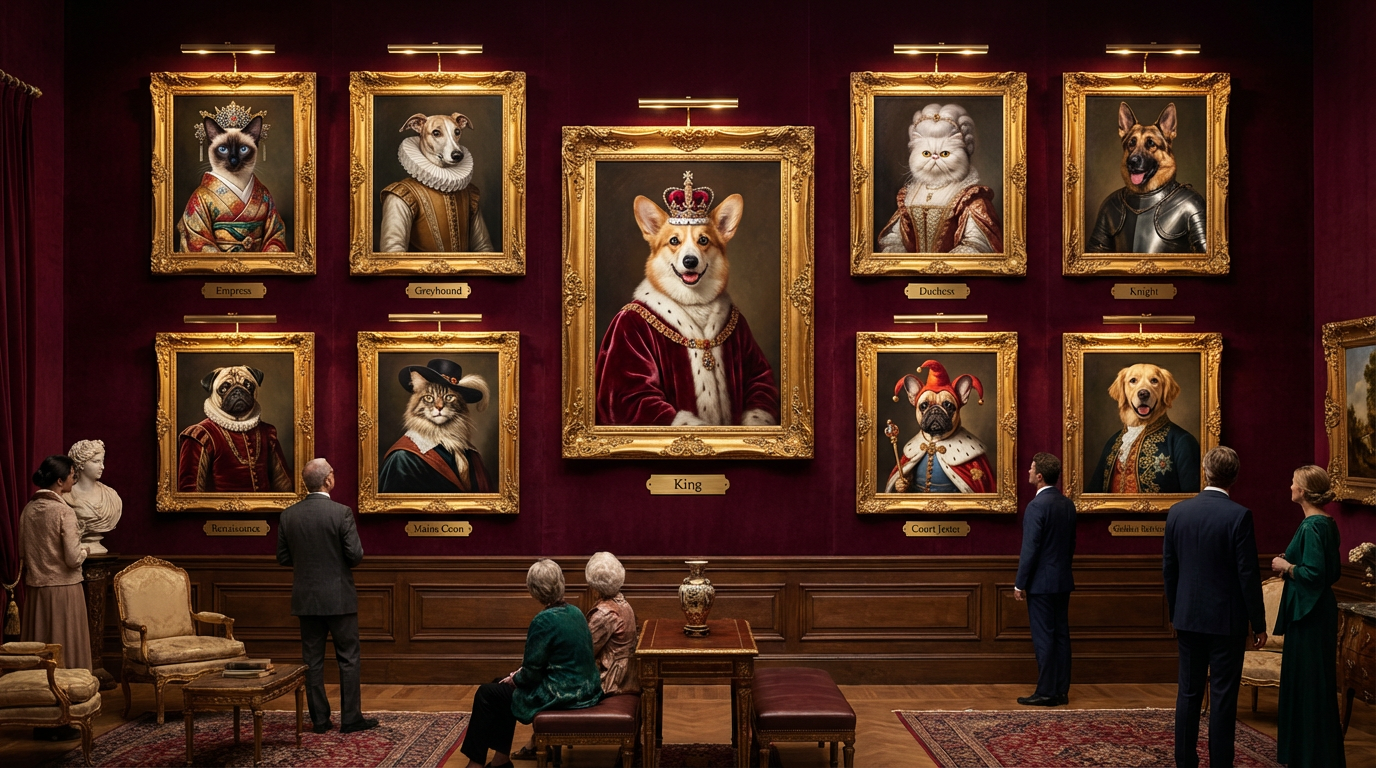
If you’ve spent more than five minutes on social media lately, you’ve likely encountered a regal-looking Golden Retriever in a velvet Elizabethan ruff or a Tabby cat wearing the armor of a medieval knight. The royal pet portrait trend has taken over the internet — and for good reason. It’s hilarious, heart-melting, and a little bit grand all at once.
10 royal styles — one for every pet personality.
1. Renaissance Royalty (The Classic King/Queen)
The Renaissance style is the gold standard for royal pet portraits. Inspired by Da Vinci and Raphael, this style features rich velvet robes in deep crimsons and royal blues, gold embroidery, and oversized jeweled crowns against a moody palace interior.
Best for: Stoic, dignified pets — German Shepherds, Great Danes, Siamese and Russian Blue cats.
2. Victorian Aristocrat
High lace collars, silk cravats, top hats, and monocles in softer pinks and creams suggesting a well-lit library or garden party. For the pet who refuses anything but premium kibble and has a reserved sofa spot that no one else may touch.
Best for: Poodles, Cavalier King Charles Spaniels, Persian cats.
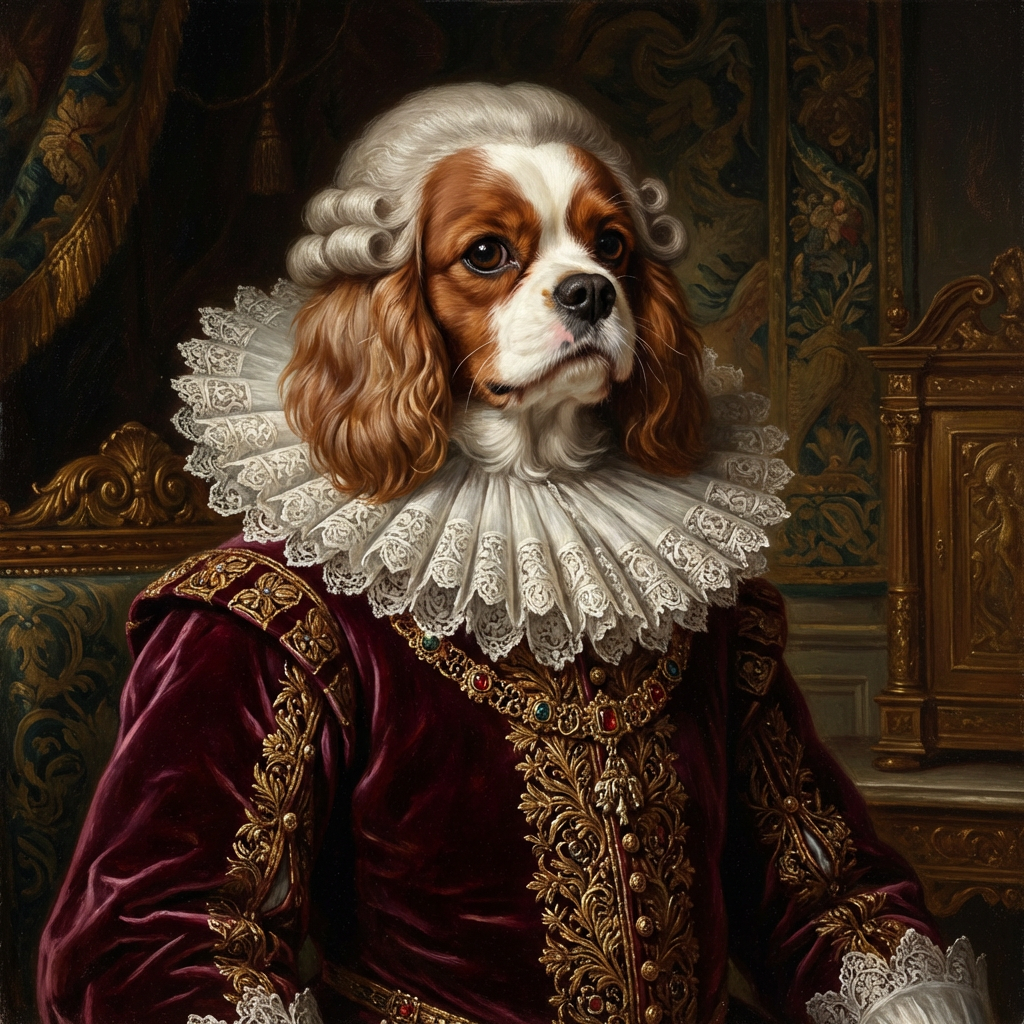
A Cavalier King Charles Spaniel — every bit the French aristocrat.
3. Egyptian Pharaoh
Golden headdresses (the Nemes), heavy kohl eyeliner, and massive turquoise and lapis lazuli jewelry against hieroglyphic-carved sandstone. In Ancient Egypt, cats were already worshipped as gods — this style just makes it official.
Best for: Sphynx cats, Maine Coons, Greyhounds, Basenjis.
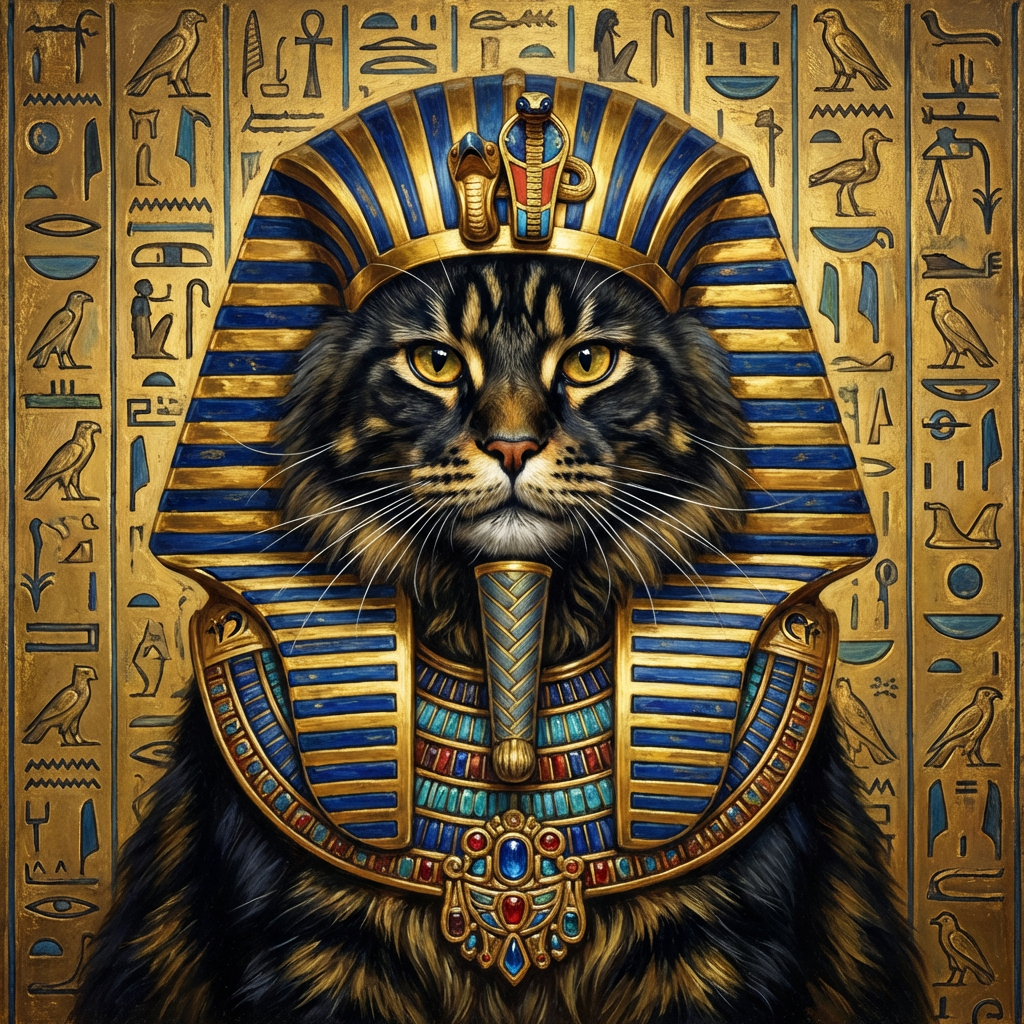
The Maine Coon: A Pharaoh reborn in fur.
4. Medieval Knight
Shining steel armor with realistic reflections, a heavy woolen cloak, and a shield emblazoned with a paw print crest. Perfect for the loyal protector of the household — the dog who alerts you every time the mailman arrives.
Best for: Rottweilers, Dobermans, English Bulldogs, Norwegian Forest Cats.
5. Baroque Nobleman/Noblewoman
Massive powdered wigs, ruffled silk shirts, and theatrical lighting emphasizing every fold of fabric. This is for the pet with a flair for the dramatic — the one who “faints” when they want a treat.
Best for: Shih Tzus, Bichon Frises, Ragdoll cats.
6. Japanese Samurai
Traditional lacquered yoroi armor, a kabuto helmet, and a katana — set against falling cherry blossoms or a Zen garden. For the stoic, observant cat who watches birds from the window for hours without blinking.
Best for: Shiba Inus, Akita Inus, black cats, Japanese Bobtails.
7. Napoleonic General
A double-breasted jacket with gold epaulettes, a bicorne hat, and a sash of honor. Inspired by “Napoléon Crossing the Alps” — perfect for small pets with massive, commanding personalities.
Best for: Chihuahuas, French Bulldogs, Terriers.
8. Elizabethan Noble
The iconic pleated ruff collar, pearl-encrusted gowns, and pale refined textures set against Tudor wood-paneling. For pets with long elegant necks who carry themselves with an air of grace and slight boredom.
Best for: Afghan Hounds, Salukis, Whippets, Siamese cats.
9. Ancient Greek Philosopher
A flowing white toga, a laurel wreath, and the texture of a weathered marble bust against Athenian columns. For the wise old soul who seems to know exactly what you’re thinking.
Best for: Basset Hounds, Bloodhounds, British Shorthairs.
10. Modern Pop Art Royalty
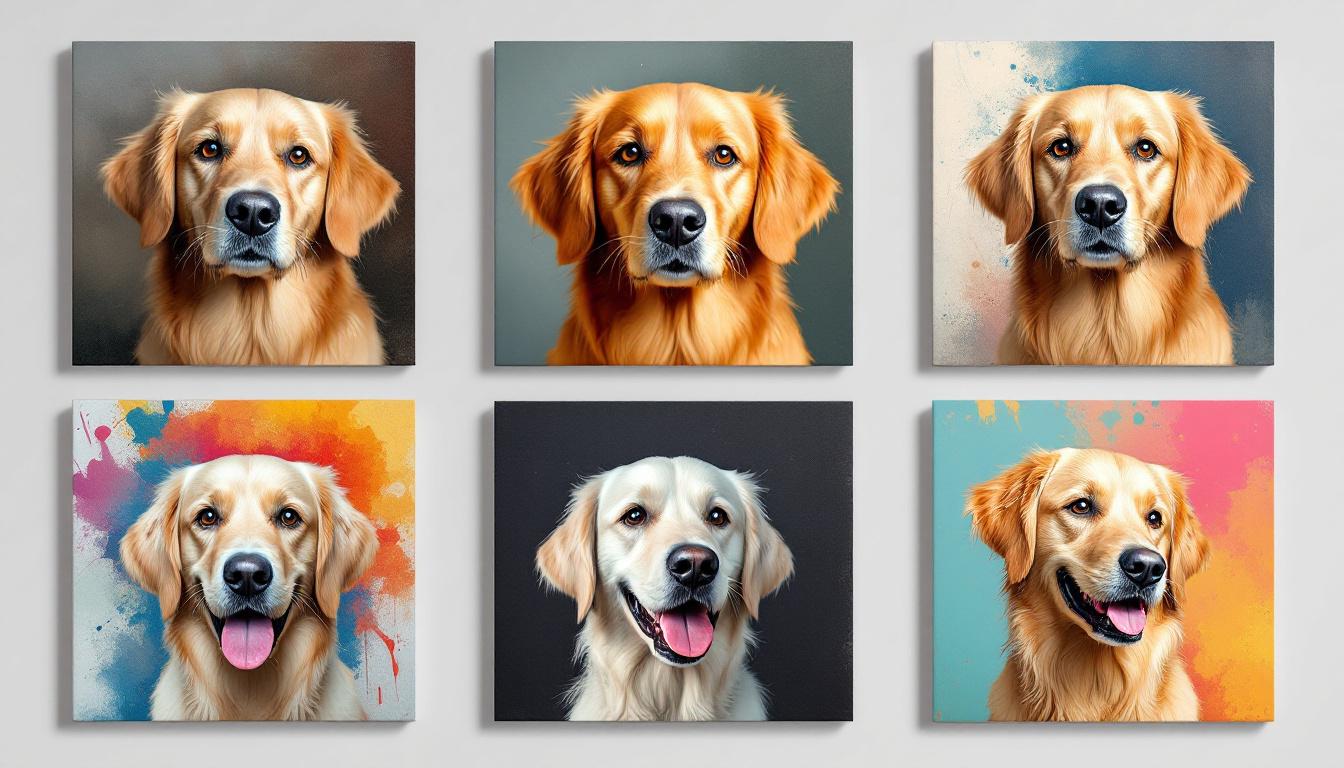
Neon pinks, electric blues, sunny yellows, bold black outlines, and a stylized graphic crown. A contemporary, fun take on royal portraiture that pops off any wall.
Best for: Labs, Golden Retrievers, Corgis — happy open faces that shine in bright optimistic colors.
How to Choose the Right Style
Observe their daily routine: Protector? Knight or Samurai. Sunbathing goddess? Egyptian Pharaoh.
Consider their physical features: Fluffy breeds shine in Renaissance; sleek muscular breeds suit Napoleonic.
Match your home’s aesthetic: Modern minimalist home? Pop Art. Dark academia office? Renaissance or Baroque.
Try All 10 Styles in 30 Seconds with PixPawAI
You don’t need to commission an expensive artist. With PixPawAI, generate any of these styles in under 30 seconds. Experiment with different looks for free before committing to a print.
Not sure if your Beagle looks better as a King or a General? Try both — it’s free to find out.
The Perfect Gift for Pet Lovers
A royal pet portrait is the ultimate personalized gift — thoughtful, unique, and guaranteed to be the most talked-about item at any gathering. It says “I understand the special bond you share with your animal.”
Your pet has already claimed the throne in your heart. Give them the recognition they deserve.
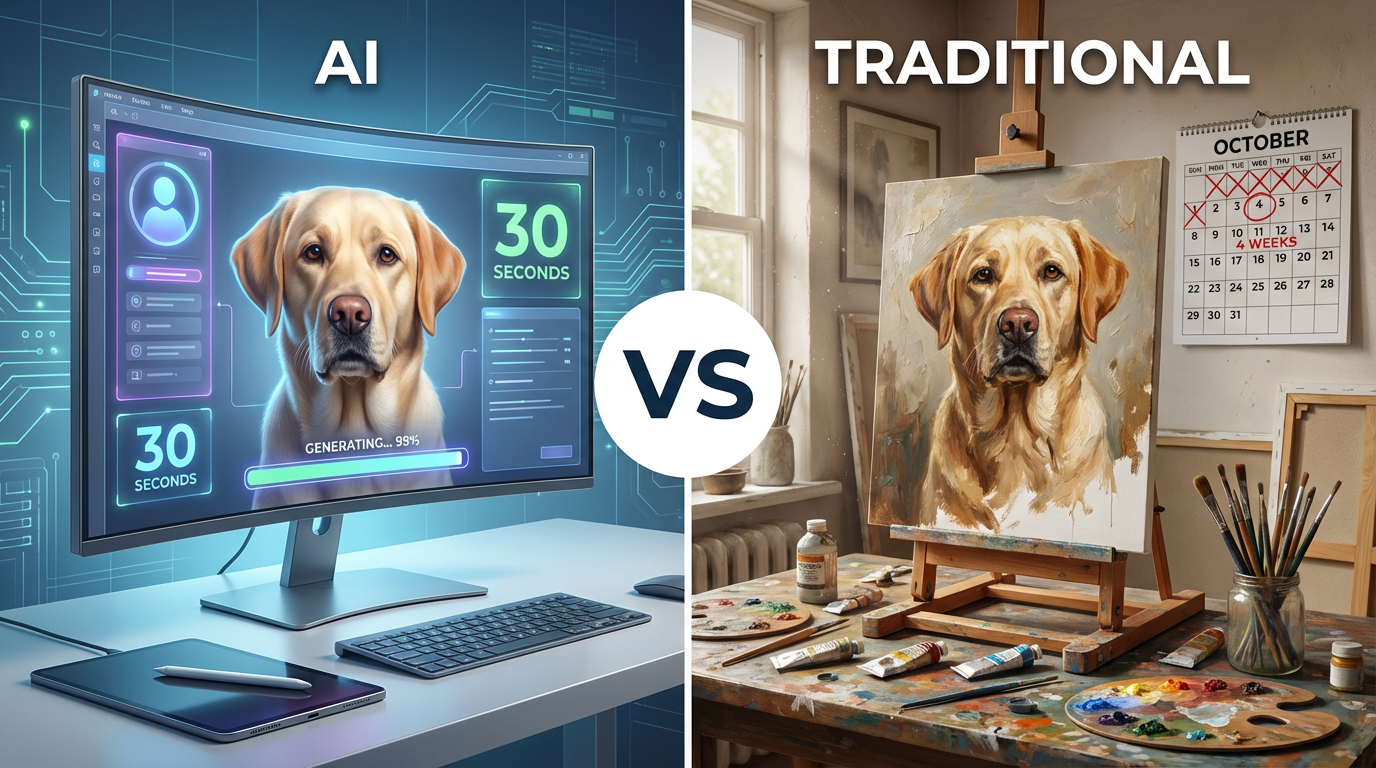
Choosing the perfect personalized gift can feel like a high-stakes mission. You want something that captures a pet’s unique spirit, something that will be cherished for years, and ideally, something that won’t arrive three weeks after the birthday. When it comes to our beloved four-legged companions, a custom pet portrait is often the first choice. But in 2026, the landscape has changed. The rise of sophisticated generative AI has created a new dilemma for gift-givers: should you commission a traditional hand-painted masterpiece or opt for the speed and versatility of an AI-generated portrait? In this custom pet portrait comparison, we’ll explore the pros and cons of both to help you find the best pet portrait gift for your needs.
What Are Traditional Pet Portraits?
Traditional pet portraits are works of art created by human hands using physical or digital media. These are the “classic” choice and carry a long history of prestige and personal touch.
Hand-Painted Oils & Acrylics: Artists spend dozens of hours layering paint on canvas to capture every whisker and the soul in a pet’s eyes.
Watercolors & Charcoal: These offer a softer, more artistic vibe, perfect for a minimalist or classic home aesthetic.
Digital Paintings: Many modern artists use tablets and software like Procreate — still manually painted stroke-by-stroke by a human artist.
What Are AI Pet Portraits?
AI pet portraits represent the cutting edge of personalization. Using platforms like PixPawAI, you can transform a simple smartphone photo into a professional-grade work of art in seconds.
How PixPawAI Works: Upload a photo, select from 8+ distinct artistic styles, and the AI processes the image in about 30 seconds.
Detailed Comparison: AI vs. Traditional
Feature
Traditional
AI (PixPawAI)
Price Range
$200 – $1,500+
$0 – $39.99
Turnaround Time
2 – 6 weeks
30 seconds
Artistic Styles
1 (artist’s style)
8+ (switch instantly)
Revisions
Limited & Slow
Instant & Unlimited
When to Choose AI (PixPawAI)
You need a high-quality gift quickly — on any budget
You want something playful, creative, and modern
You value a company that gives back (PixPawAI donates 10% to animal shelters)
Conclusion: The Best Pet Portrait Gift in 2026
For 90% of pet owners who want a stunning, personalized, and affordable way to celebrate their furry friends, AI pet portraits are the clear winner. They offer speed, variety, and incredible value without the wait.
Mother’s Day is just around the corner, and there’s a growing community of mothers who deserve just as much recognition: Dog Moms. For many, a dog isn’t “just a pet” — they are a family member, a best friend, and a source of unconditional love. Generic store-bought gifts are fine, but nothing says “I see you” quite like a personalized pet gift.
Top 10 Personalized Pet Gift Ideas (Ranked by Wow Factor)
1. Custom AI Pet Portrait Canvas (PixPawAI) — #1 Pick
Price Range: $49 – $129
PixPawAI uses cutting-edge generative AI to turn a simple smartphone photo into a high-end masterpiece. Whether you want your dog as Renaissance royalty, a rugged astronaut, or a whimsical watercolor painting, PixPawAI delivers stunning detail in 30 seconds.
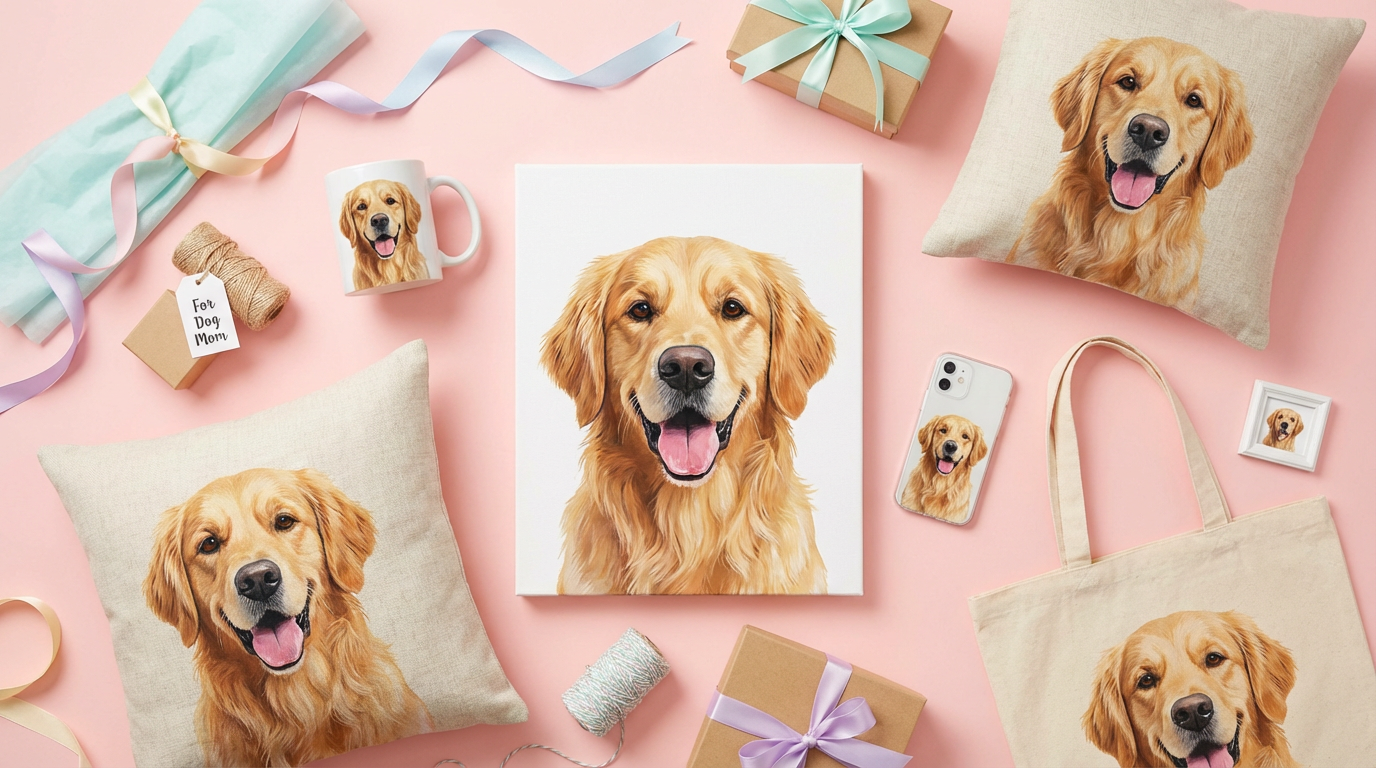
2. Pet Portrait Coffee Mug
Price Range: $15 – $25
A custom ceramic mug featuring her dog makes every morning brighter.
3. Pet Face Throw Pillow
Price Range: $30 – $50
Often shaped to the silhouette of the dog’s head — the next best thing to cuddling the real dog.
4. Personalized Pet Phone Case
Price Range: $25 – $45
Seeing a happy pup’s face on a durable case is a constant mood booster.
5. Custom Pet T-Shirt
Price Range: $25 – $40
High-quality cotton tees with minimalist line art of a pet are very trendy right now.
6. Pet Memorial Jewelry
Price Range: $40 – $150
A necklace or bracelet engraved with the pet’s name, paw print, or portrait is deeply moving.
7. Personalized Pet Blanket
Price Range: $50 – $90
A giant plush Sherpa blanket covered in a repeating pattern of a dog’s face.
8. Custom Pet Socks
Price Range: $15 – $25
Fun, quirky, always a hit.
9. Pet Portrait Tote Bag
Price Range: $20 – $35
Sturdy canvas totes with beautiful custom illustrations.
10. Digital Pet Art
Price Range: $10 – $30
A high-resolution digital file — the perfect last-minute gift.
Why AI Pet Portraits Are the Best Value in 2026
Speed: Preview in minutes, not weeks
Affordability: The aesthetic of a $500 oil painting at a fraction of the cost
Versatility: Golden Retriever as a Viking? Cyberpunk hero? Done instantly
The PixPawAI Mission: Giving Back
When you choose PixPawAI, 10% of every purchase is donated to local animal shelters.
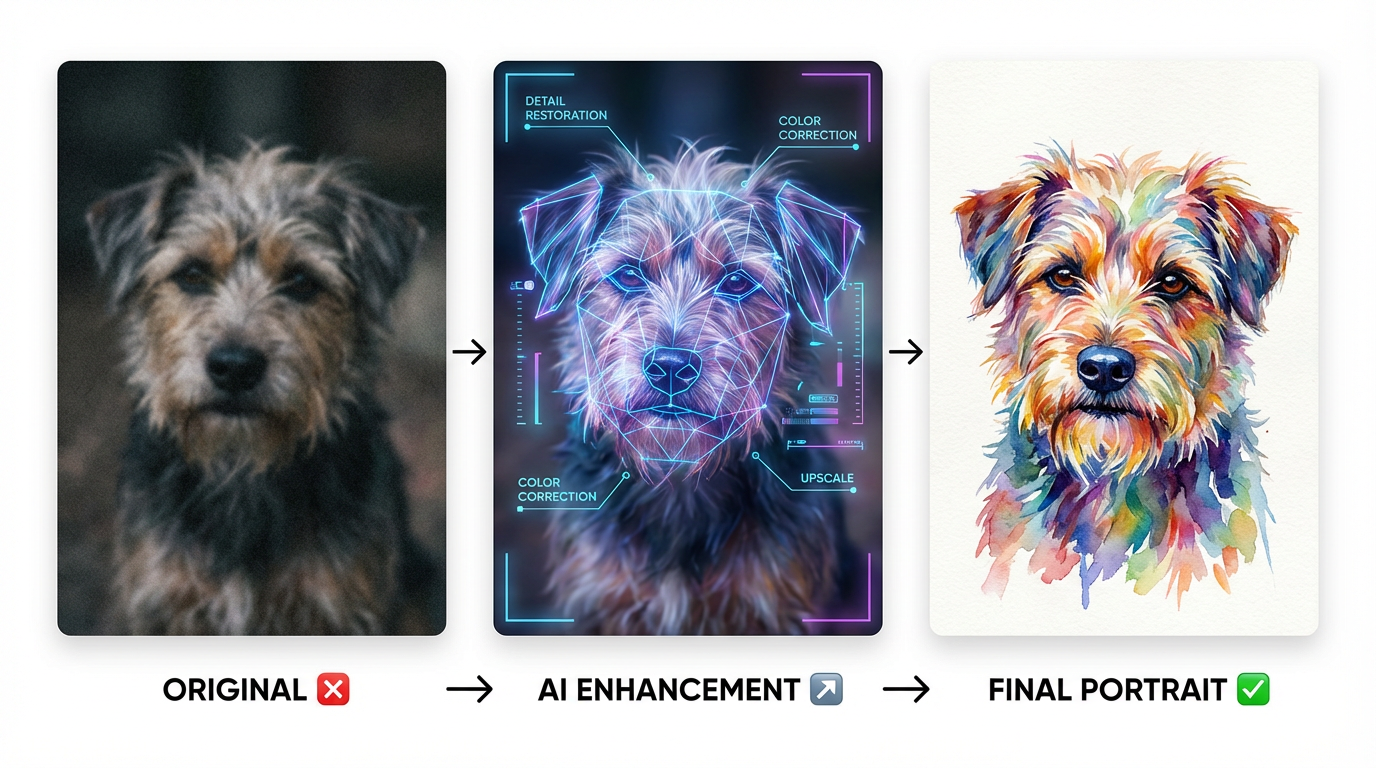
Imagine this: you’re scrolling through old photos and you find it — the only photo you have of your childhood dog Buster. Your heart leaps. Then it sinks. The photo is a mess. It’s blurry. The lighting is terrible. You want to frame it and put it on your wall, but it’s just not “good enough.”
If you’ve felt the sting of a precious memory trapped in a low-quality image, you aren’t alone. But in 2026, a “bad photo” is no longer the end of the story. Thanks to generative AI, you can now fix a blurry pet photo and transform it into a breathtaking piece of custom art.
Why Pet Photos Are Usually Imperfect
Pets are notoriously difficult subjects. Three main culprits:
The “Zoomies” Effect: Motion blur from a tail wagging at 100mph.
Low-Light Drama: Phone cameras produce grainy digital noise in low light.
The “One-Shot” Limitation: The funniest moment happens in a split second.
Can AI Really Work with “Bad” Photos? Yes.
Unlike a traditional editor, Generative AI has “learned” what millions of dogs and cats look like. When you upload a blurry photo, the AI analyzes the shapes, colors, and context — then fills in the details based on the “hints” in your original photo.
Step-by-Step Tutorial
Step 1: Choose Your Best “Bad” Photo
The pet’s face — especially the eyes — should be at least somewhat visible. Don’t worry about resolution or grain.
Step 2: Upload to PixPawAI.com
Go to pixpawai.com and click upload. No technical skills required.
Step 3: Select an Art Style
For very blurry photos, choose Watercolor or Illustration styles — these are more forgiving and result in a cohesive piece of art.
Step 4: Generate in 30 Seconds
Hit “Generate.” Your blurry snapshot becomes a vibrant, soulful portrait.
Step 5: Download HD and Order Physical Products
Download the high-resolution digital file, then optionally order canvases, mugs, or pillows.
Pro Tips for Best Results
Crop to the face before uploading.
Auto-enhance brightness on your phone first if very dark.
One pet at a time for best results.
Try 2–3 styles — Oil Painting vs Watercolor can look very different.
Conclusion: Don’t Let Your Memories Stay Blurry
Your pet is a masterpiece — their portrait should be too.
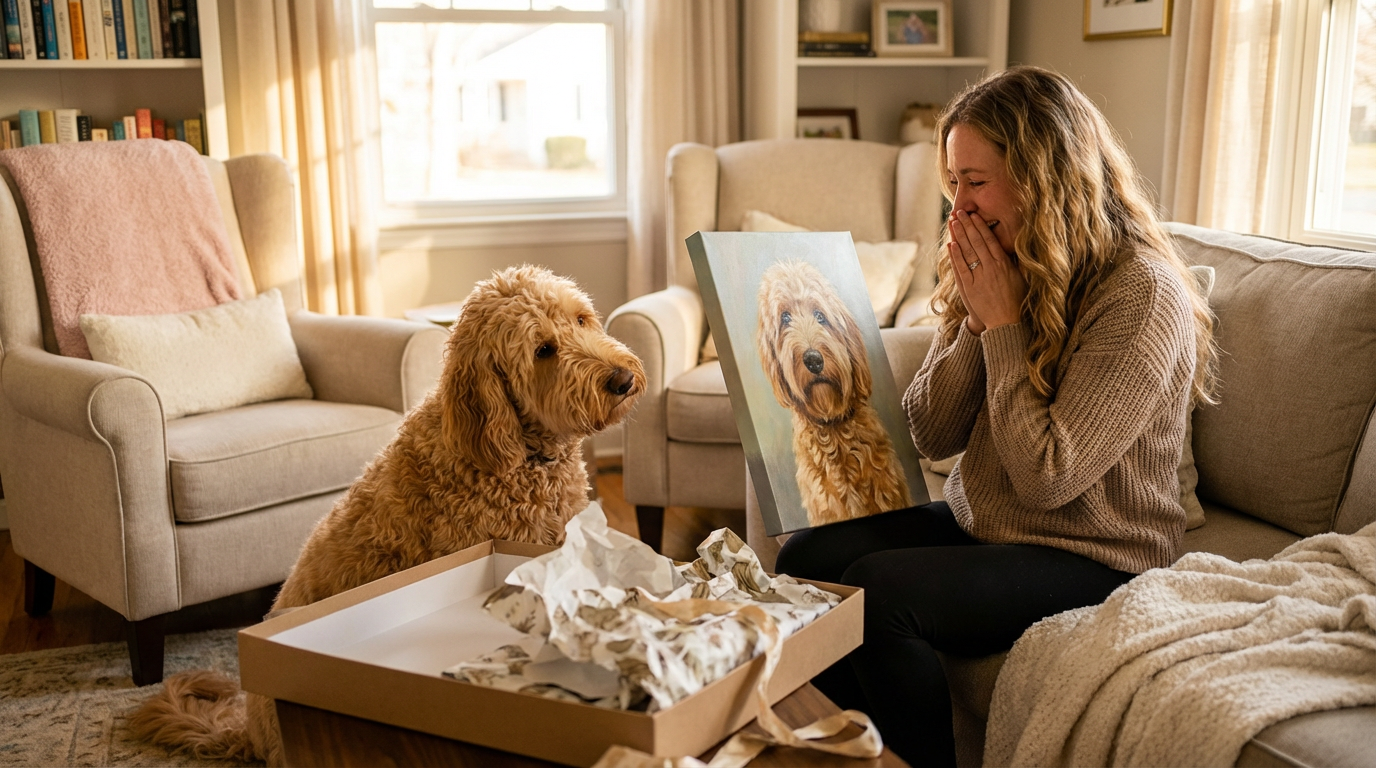
The house is quiet now. There are no rhythmic clicks of nails against the hardwood floor, no enthusiastic greeting at the door after a long day, and no warm weight settling against your feet as you settle into the sofa. For Sarah, the silence was the hardest part after she said goodbye to Max, her Golden Retriever of thirteen years. Max wasn’t just a dog; he was the keeper of her secrets, her partner on thousand-mile road trips, and the steady heartbeat of her home.
When Max passed, Sarah found herself staring at the thousands of photos on her phone—blurry action shots, sleepy morning snuggles, and that one perfect photo of him sitting in a field of sunflowers. She wanted more than just a digital file; she wanted a tribute that captured the soul of the dog who had given her so much. This is the story of how a pet memorial portrait became more than just a piece of decor—it became a bridge back to the love they shared.
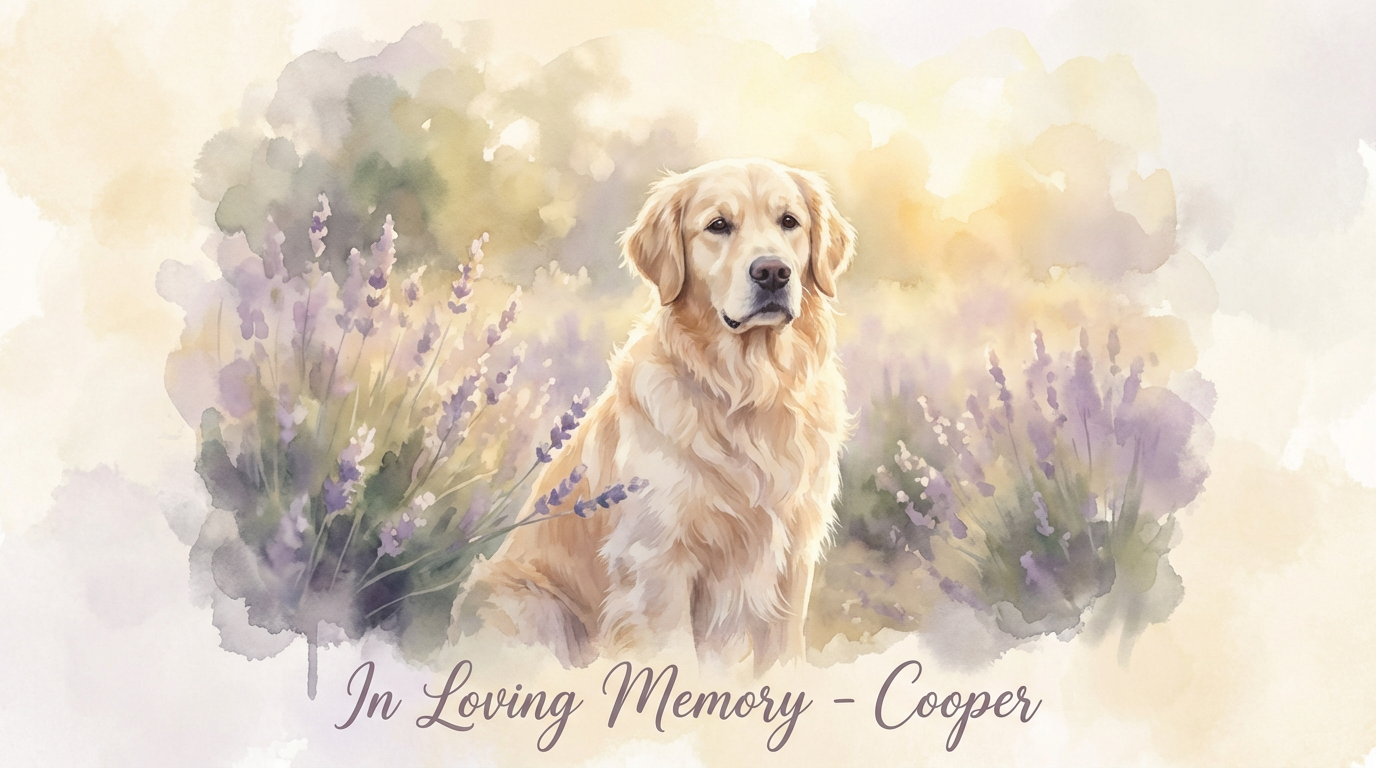
An AI-generated watercolor memorial portrait — turning cherished memories into timeless art.
The Emotional Journey of Pet Loss: Why We Memorialize
Losing a pet is a unique and often misunderstood form of grief. Unlike the loss of a human relative, society sometimes expects us to “get over it” quickly. But as anyone who has loved an animal knows, the bond is pure, uncomplicated, and profoundly deep. Pets are our constant companions, offering unconditional love that doesn’t ask for anything but our presence.
The Psychology of Remembrance
Psychologists agree that creating a tangible memorial can be a vital step in the healing process. “Memorialization serves as a physical anchor for our memories,” says Dr. Elena Aris, a specialist in grief counseling. “It validates the significance of the relationship and provides a dedicated space—whether it’s on a wall or a shelf—where the love continues to live.”
A rainbow bridge pet memorial isn’t just about marking an ending; it’s about celebrating a life. It allows owners to shift their focus from the painful final moments to the vibrant, joyful years that preceded them. This transition is essential for emotional recovery.
Why Pet Memorial Art Matters
Art has a way of capturing “the essence” that a simple photograph sometimes misses. While a photo records a split second in time, a custom pet memorial portrait synthesized through artistic styles can evoke the personality, the spirit, and the “vibe” of a pet. It transforms a digital memory into a legacy.
What is a Pet Memorial Portrait?
At its core, a pet memorial portrait is an artistic rendering of a pet that has passed away. Historically, these were hand-painted oils or charcoal sketches commissioned by the wealthy. Today, technology has democratized this process, making pet memorial gifts accessible to everyone.
These portraits serve several purposes:
A Daily Reminder: A beautiful visual cue of the joy the pet brought.
A Conversation Starter: An invitation for guests to ask about the pet, allowing the owner to share stories.
A Gift of Sympathy: One of the best pet memorial gift ideas for a friend or family member navigating the “Rainbow Bridge” journey.
How AI is Revolutionizing Pet Memorial Gifts
In the past, getting a custom portrait meant waiting weeks for an artist and paying hundreds, if not thousands, of dollars. PixPawAI has changed the landscape by using advanced artificial intelligence to create high-quality pet remembrance art in a fraction of the time.
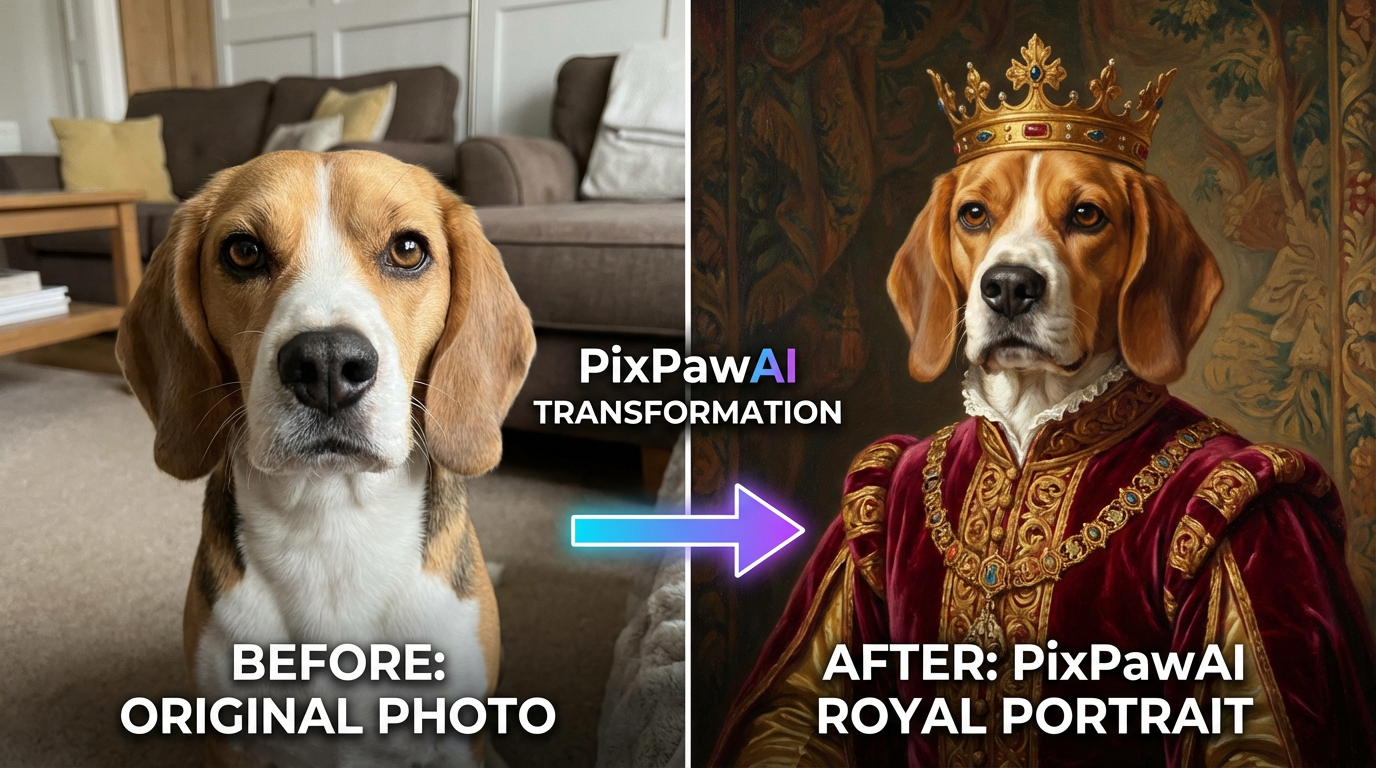
The magic of AI transformation — from everyday photo to royal masterpiece in 30 seconds.
The 30-Second Transformation
The most significant barrier to memorializing a pet is often the emotional weight of the task. PixPawAI removes the friction. By uploading a photo, the AI analyzes the unique features of your pet—the specific tilt of their ears, the sparkle in their eyes, and the texture of their fur—and applies artistic logic to create a masterpiece in just 30 seconds.
8+ Styles to Match Their Personality
Every pet is different, and their art should reflect that. PixPawAI offers over eight distinct styles to ensure the portrait matches your pet’s unique character:
Royal Oil Painting: For the cat who truly ruled the household.
Dreamy Watercolor: Perfect for a gentle soul or a rainbow bridge pet memorial.
Classic Sketch: A timeless, minimalist tribute.
Vibrant Pop Art: For the pet whose energy was infectious.
Ethereal Illustration: Capturing the magical bond between human and animal.
Why Choose an AI Pet Memorial Portrait?
When searching for a pet loss gift, people often weigh the pros and cons of different mediums. AI-generated art offers a unique blend of benefits that traditional methods can’t match.
1. Emotional Accuracy
AI models are trained on millions of images, allowing them to understand the anatomy and “expression” of various breeds. This ensures that the final custom pet memorial actually looks like your pet, not just a generic version of the breed.
2. Accessibility and Affordability
By removing the manual labor of hand-painting, PixPawAI makes professional-grade art affordable. This allows more pet owners to have a high-quality tribute without financial strain during an already difficult time.
3. Infinite Revisions
If the first generation isn’t quite right, you can try different styles or photos until you find the one that resonates. This flexibility is impossible with traditional commission work.
AI vs. Traditional Pet Memorial Portraits: A Comparison
Feature
AI Pet Memorial (PixPawAI)
Traditional Hand-Painted Portrait
Turnaround Time
30 Seconds
2 – 6 Weeks
Price Range
Affordable / Budget-Friendly
$200 – $1,500+
Accuracy
High (Based on Pixel Analysis)
Subjective (Depends on Artist Skill)
Revisions
Instant & Unlimited
Difficult & Costly
Physical Goods
Available (Canvas, Mugs, etc.)
Original Canvas Only
How to Create the Perfect Custom Pet Memorial with PixPawAI
Creating a tribute shouldn’t be stressful. Here is how you can memorialize your pet in three simple steps:
Upload Your Favorite Photo: Choose a clear photo where your pet’s face is visible. Even “imperfect” photos can be transformed into stunning art.
Select Your Style: Choose from our 8+ styles. Think about where you will display the art and which style best captures their spirit.
Generate and Cherish: In 30 seconds, your pet memorial portrait is ready. You can then choose to have it printed on a variety of high-quality products.
5 Meaningful Ways to Display Your Pet Remembrance Art
Once you have your digital masterpiece, how should you display it? At PixPawAI, we believe pet memorial gifts should be integrated into your daily life.
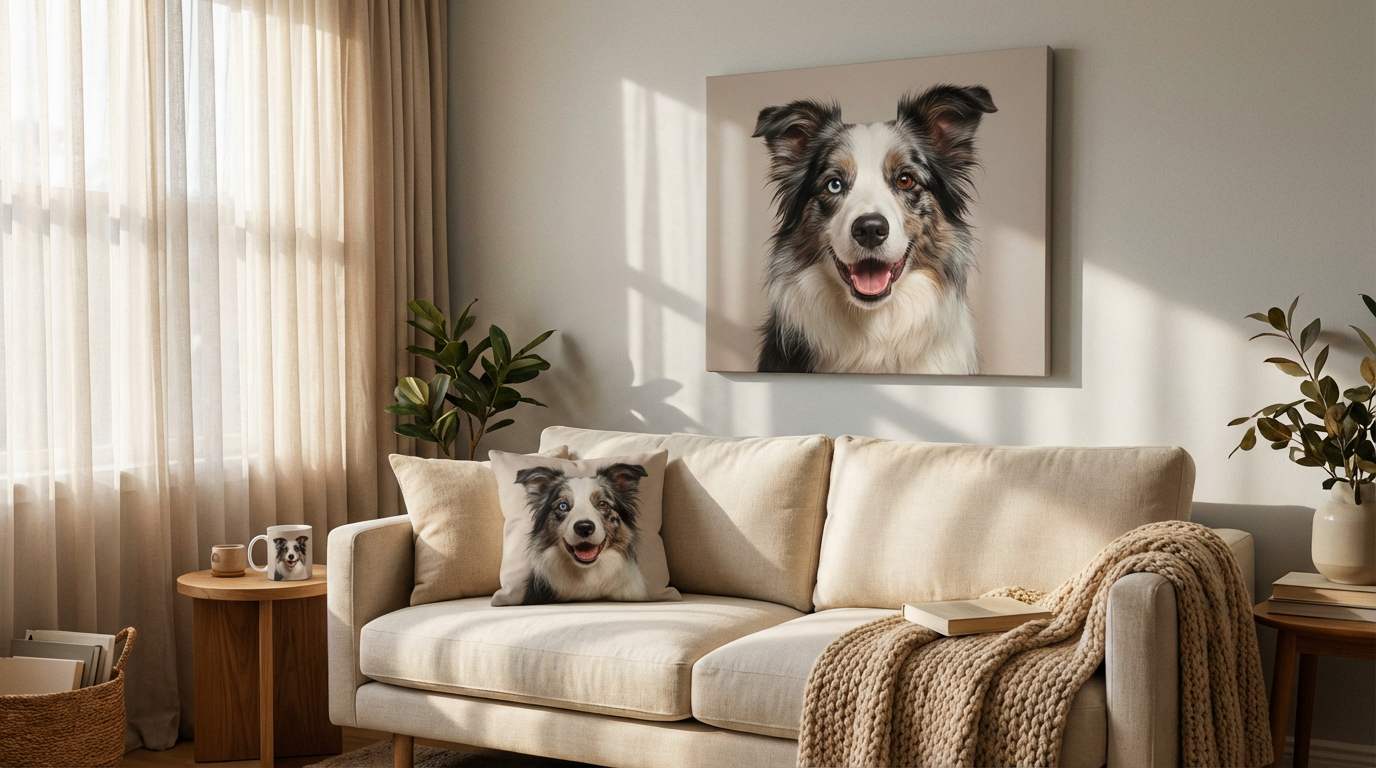
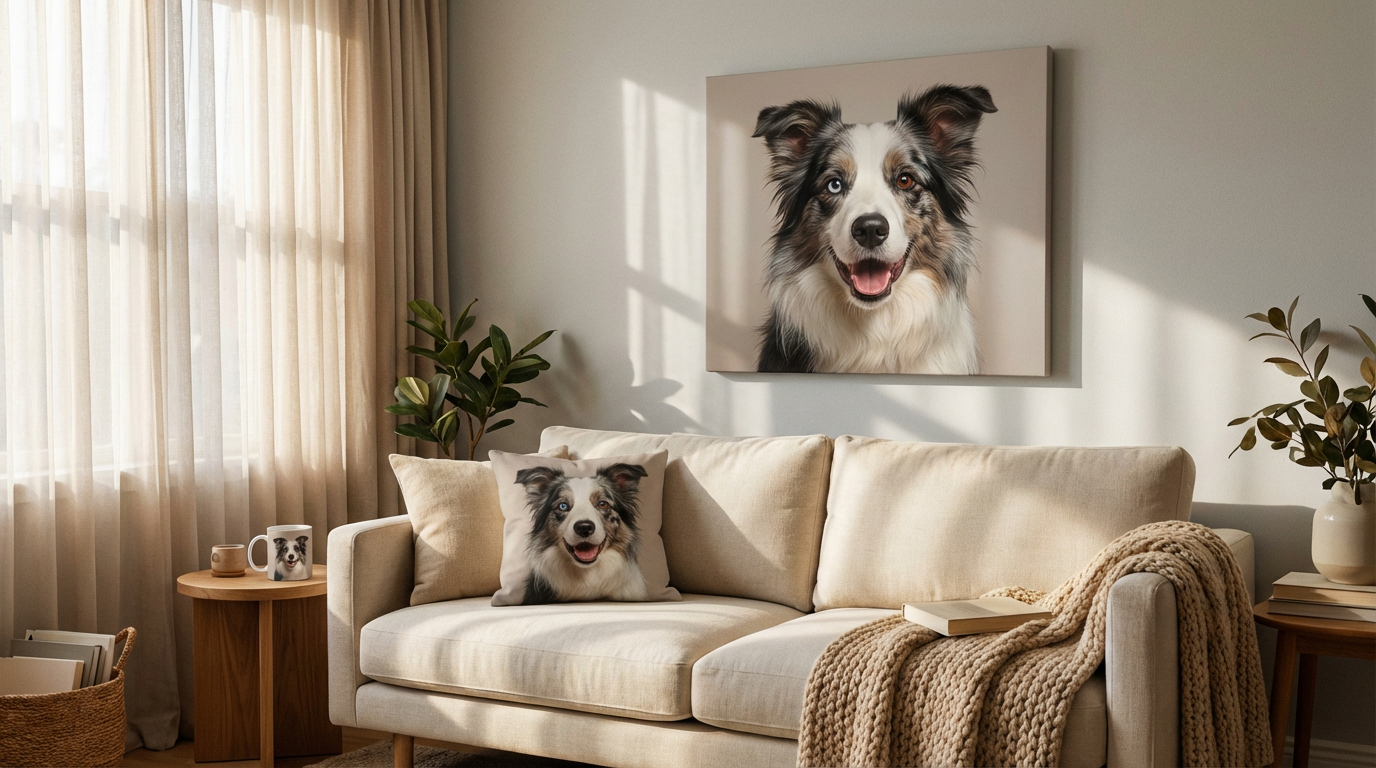
Pet memorial art beautifully displayed as a canvas print and matching throw pillow.
1. The Classic Gallery Canvas
There is nothing quite like a high-quality canvas to command a room. Placing a canvas portrait in your pet’s favorite sun-drenched corner or above their old bed creates a permanent place of honor.
2. The Comforting Throw Pillow
Grief often manifests as a physical need for closeness. A custom pillow featuring your pet’s portrait offers a tangible way to “hold” them during quiet evenings on the couch.
3. The Morning Coffee Mug
For many, the morning routine was shared with a pet—waiting for their breakfast or a morning walk. A memorial mug lets you start every day with a visual reminder of your best friend.
4. The Digital Keepsake
Set your AI portrait as your phone or computer wallpaper. It’s a subtle, constant way to keep their memory close wherever you go.
5. A Personalized Memorial Garden Marker
Pair your printed art with a small outdoor plaque in a “Rainbow Bridge” garden. It creates a serene space for reflection and remembrance.
Beyond Art: Giving Back to the Pet Community
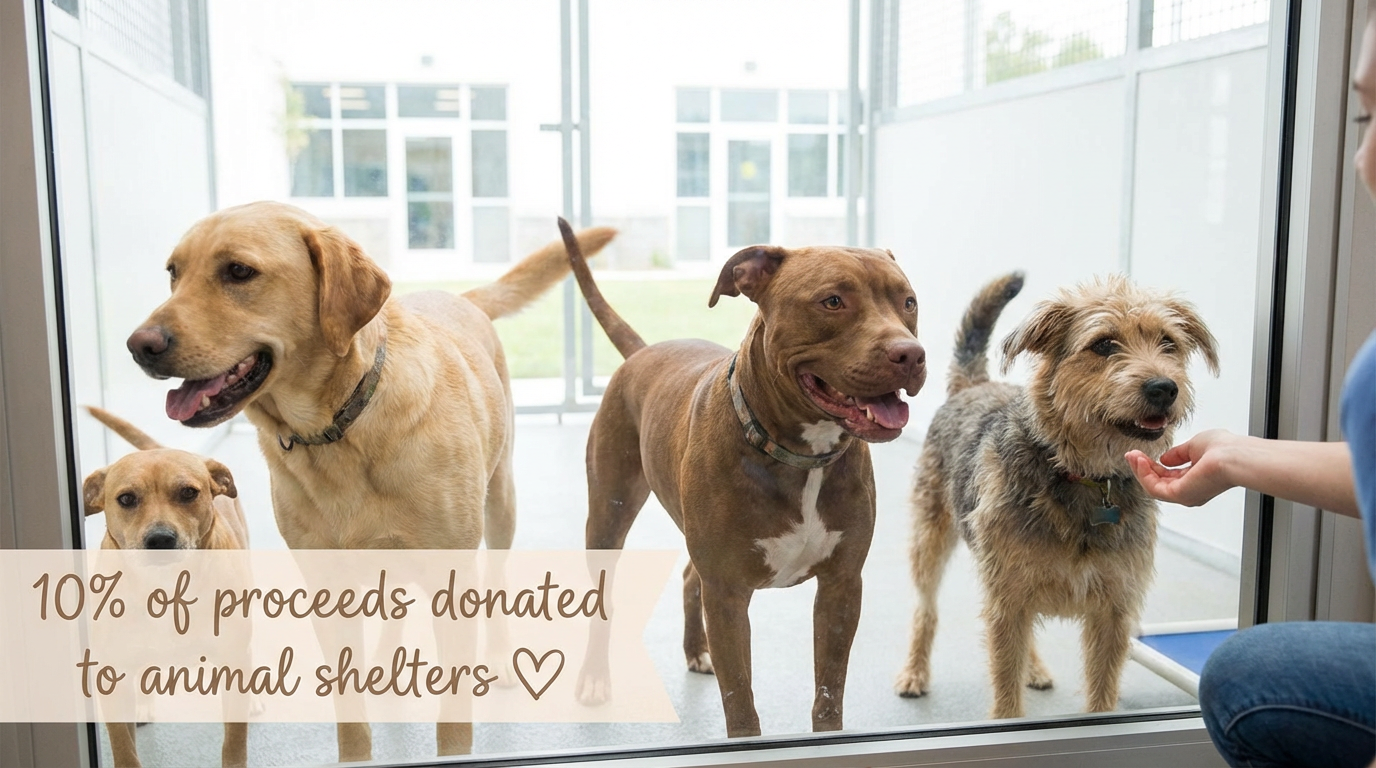
10% of all PixPawAI proceeds go directly to animal rescue organizations.
At PixPawAI, we know that the love for a pet extends to all animals in need. That is why we are committed to more than just art. We donate 10% of all proceeds to animal shelters.
When you create a pet memorial portrait with us, you aren’t just honoring your pet’s memory; you are helping provide food, medical care, and a second chance for pets who haven’t found their forever homes yet. It’s a way for your pet’s legacy to continue making the world a kinder place.
Finding Comfort at the Rainbow Bridge
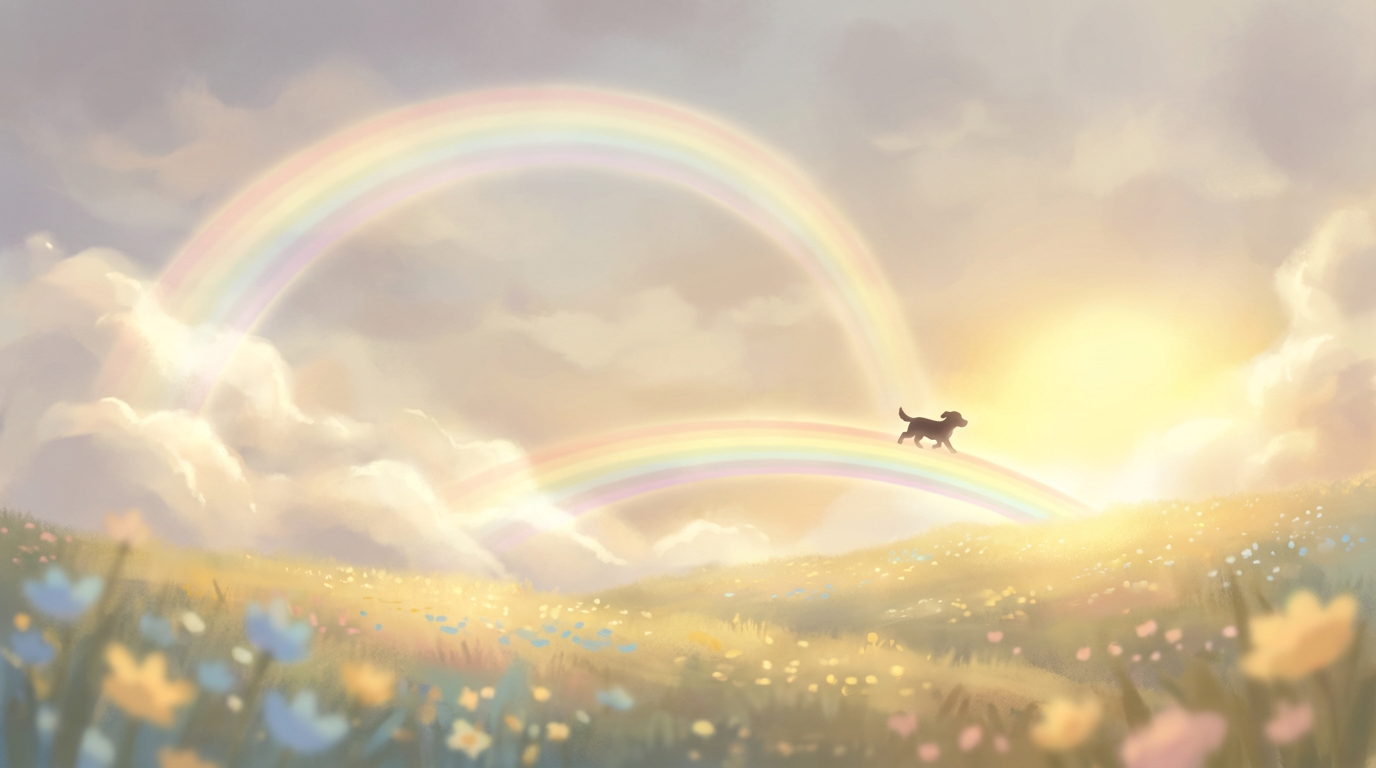
The Rainbow Bridge — a place where love lives on forever.
How to memorialize a pet is a deeply personal decision. Whether it’s through a grand canvas or a small digital file, the goal is the same: to ensure that the love you shared isn’t forgotten.
Sarah eventually chose a watercolor style for Max’s portrait. It now hangs in her hallway. “Every time I walk past it,” she says, “I don’t think about his last day anymore. I see the Max who loved to chase tennis balls and steal my socks. I see the Max who loved me.”
If you are looking for the best pet memorial gift ideas—whether for yourself or a grieving friend—remember that it’s the thought and the memory that count. Technology just gives us a beautiful new way to express that love.
Ready to honor your best friend?
Turn your favorite photos into a lasting legacy. Our AI preserves the spirit of your pet in styles that reflect the beauty of your bond.
The upcoming USMCA (United States-Mexico-Canada Agreement) review is drawing close, and trade analysts are warning of significant potential changes to North American supply chain rules. As reported by FreightWaves, the review process could alter rules of origin, tariff structures, and cross-border logistics norms that furniture importers have relied on — particularly for goods routed through or manufactured in Mexico before reaching the U.S. market.
Why It Matters for Buyers
For overseas furniture importers and commercial project buyers sourcing from China, a renegotiated USMCA could indirectly reshape cost structures. If U.S. buyers increasingly shift sourcing to Mexico-based manufacturers to meet revised regional content requirements, Chinese suppliers may face stronger competition — or, alternatively, new partnership opportunities for component supply. Hotel and hospitality procurement teams with multi-year contracts should also flag potential reclassification risks for goods in transit through North America.
What Buyers Should Do
1. Monitor USMCA review progress closely — especially any updates to furniture-related HS codes and rules of origin definitions that may affect landed cost calculations. 2. Discuss contingency sourcing options with your Chinese supplier now, before any policy shifts create lead-time or pricing disruptions in Q3–Q4 2026.
Hapag-Lloyd, one of the world’s largest container shipping lines, reported a significant earnings decline for 2025. Falling freight rates combined with rising operational costs have squeezed margins across the industry. The company’s results reflect a broader market correction after the elevated rate environment of 2023–2024, and analysts suggest this soft patch may persist through mid-2026 depending on demand recovery and fleet capacity levels.
Why It Matters for Buyers
For furniture importers and wholesale buyers shipping from China, softening freight rates from major carriers like Hapag-Lloyd is generally favorable for landed cost — but the picture is nuanced. Carriers under margin pressure may reduce sailings, alter port rotations, or consolidate services, which can affect transit times and booking availability. Commercial project buyers working on tight delivery schedules should not assume low rates mean reliable space availability.
What Buyers Should Do
1. Use this softer rate window to negotiate longer-term freight contracts with your forwarder — locking in rates now may provide cost certainty through a potential recovery in H2 2026. 2. Request updated transit time estimates from your supplier or freight partner, as service schedules may have shifted alongside carrier cost-cutting measures.
The U.S. Court of International Trade expanded a prior tariff refund order to include finally liquidated entries, potentially widening the pool of importers that may recover duties tied to earlier tariff disputes.
Why It Matters for Buyers
For furniture importers shipping into the U.S., this ruling may affect landed cost assumptions, historical duty recovery, and how finance teams review older entries. Buyers working on large wholesale or project orders should treat it as a reminder that tariff exposure is not just a pricing issue at purchase—it can also create retroactive savings or documentation risk later.
What Buyers Should Do
• Ask your customs broker and trade counsel to review past entries that may now qualify for refunds or amended treatment. • Recheck current landed cost models and supplier quotes so your pricing decisions reflect both duty risk and possible recovery opportunities.
10 Best AI Dog Portrait Generators in 2026 (Free & Paid)
If you’re looking for the best ai pet portrait generator free options in 2026, you’ve landed in the right place. We tested 10 tools — from fully free apps to premium AI studios — and ranked them based on output quality, style variety, ease of use, and value for money. Whether you want a painted masterpiece of your golden retriever or a regal oil portrait of your rescue pup, these tools can deliver.
Here’s our definitive list of the best AI dog portrait generators available right now.
Quick Comparison Table
Tool
Free Plan
Styles
Starting Price
Rating
PixPawAI
✅ Yes
50+
$9.99
4.9/5 ⭐
PhotoAI
✅ Limited
20+
$19/mo
4.4/5 ⭐
PhotoGPT AI
✅ Limited
15+
$12/mo
4.2/5 ⭐
PicsArt AI
✅ Yes
10+
Free / $5/mo
4.1/5 ⭐
Fotor AI
✅ Yes
12+
Free / $8.99/mo
4.0/5 ⭐
Canva AI
✅ Yes
8+
Free / $15/mo
3.9/5 ⭐
Lensa AI
❌ No
10+
$7.99/mo
3.8/5 ⭐
Dawn AI
✅ Limited
8+
Free / $4.99/mo
3.7/5 ⭐
Remini
✅ Limited
5+
Free / $9.99/mo
3.6/5 ⭐
NightCafe
✅ Yes
20+
Free / $6/mo
3.8/5 ⭐
The 10 Best AI Dog Portrait Generators in 2026
1. PixPawAI — Best Overall AI Dog Portrait Generator
PixPawAI is purpose-built for pet portraits, making it the most focused and polished dog portrait generator free option on this list. Unlike general-purpose AI art tools, every feature here is designed around one thing: turning your pet photos into stunning, shareable artwork. Upload a clear photo of your dog and choose from 50+ artistic styles — oil painting, watercolor, fantasy knight, cartoon, royal portrait, and more. Results come back in minutes, not hours.
The quality is noticeably better than multi-purpose tools because the model is fine-tuned specifically on pet imagery. Fur textures, eye details, and breed-specific features are preserved better than you’ll find on most competitors. The free tier gives you a taste of the quality, while paid packages start at just $9.99 — making it accessible for a one-time gift or keepsake without a monthly subscription.
Pros:
50+ pet-specific styles with excellent fur and eye detail
No subscription required — buy credits as needed from $9.99
Fast turnaround, simple upload process, no design skills needed
Cons:
Requires a clear, well-lit photo for best results
Free tier is limited to lower-resolution output
Price: Freemium — from $9.99 per pack
Rating: 4.9/5 ⭐
2. PhotoAI — Best for Realistic AI Dog Portraits
PhotoAI is a professional-grade AI photo tool that handles pet portraits alongside human portraits with impressive realism. It’s built on top of the same Stable Diffusion foundation used by many premium tools but has tuned its pipeline for photo-realistic results.
Pros:
High realism — looks like a professional photo edit, not a cartoon
Batch processing available for multiple pet photos
Cons:
Subscription required for full access; can feel expensive for casual use
Less suited for painterly or artistic portrait styles
Price: Freemium — from $19/month
Rating: 4.4/5 ⭐
3. PhotoGPT AI — Best for Themed Dog Portrait Styles
PhotoGPT AI lets you place your dog into themed scenes — fantasy worlds, seasonal backdrops, seasonal outfits — making it a fun choice if you want more than a plain portrait. It works directly from your phone or browser.
Pros:
Strong themed scene variety (holiday, fantasy, seasonal)
Easy mobile interface, no design experience needed
Cons:
Portrait accuracy drops on complex dog breeds with unusual coat patterns
Monthly subscription needed to access most styles
Price: Freemium — from $12/month
Rating: 4.2/5 ⭐
4. PicsArt AI — Best Free AI Dog Portrait App
PicsArt is a widely used photo editing app that added AI portrait generation features. For a dog portrait generator free option with no upfront cost, PicsArt’s AI tools are a solid starting point — especially for casual use.
Pros:
Generous free tier with no credit card required
Built-in editing tools to touch up results post-generation
Cons:
Style quality is noticeably lower than dedicated pet portrait tools
Watermarks on free outputs
Price: Freemium — free tier available, premium from $5/month
Rating: 4.1/5 ⭐
5. Fotor AI — Best for Quick One-Click Dog Portraits
Fotor is an all-in-one photo editing platform that added AI portrait generation. It’s one of the faster tools to use — upload, select style, download. Great for users who want a no-fuss experience.
Pros:
Fast processing with minimal setup
Solid range of artistic filters and portrait effects
Cons:
Pet-specific fine-tuning is limited compared to dedicated tools
Free plan has daily credit limits
Price: Freemium — free plan available, Pro from $8.99/month
Rating: 4.0/5 ⭐
6. Canva AI — Best for Sharing and Printing Dog Portraits
Canva’s AI image generation is integrated into the broader Canva design platform, making it uniquely useful if you plan to put your ai dog portrait on a card, mug, print, or social post right after generating it.
Pros:
Seamlessly create gifts or printed products from your portraits
Free plan is generous; easy drag-and-drop design workflow
Cons:
AI portrait quality is more generic compared to pet-focused tools
Limited style control specifically for dog portraits
Price: Freemium — free plan available, Pro from $15/month
Rating: 3.9/5 ⭐
7. Lensa AI — Best for Artistic Magic Avatar-Style Portraits
Lensa AI rose to viral fame with its “Magic Avatars” feature. While it’s primarily designed for human portraits, it can handle pet photos and produce dramatic, stylized results — particularly good for fantasy and artistic styles.
Pros:
High-quality artistic output for stylized portraits
Strong mobile app experience with polished UI
Cons:
No free tier — requires a paid subscription
Not optimized for pets; results can be inconsistent on dogs
Price: Paid — from $7.99/month
Rating: 3.8/5 ⭐
8. Dawn AI — Best Budget Dog Portrait App
Dawn AI is a lightweight mobile app that generates avatar-style portraits, including pet photos. It’s budget-friendly and gets the job done for casual users who want a quick stylized image of their dog.
Pros:
Very affordable pricing with a free entry tier
Simple, quick process suitable for mobile use
Cons:
Output resolution is lower than premium alternatives
Fewer style options than dedicated AI portrait tools
Price: Freemium — free tier, premium from $4.99/month
Rating: 3.7/5 ⭐
9. Remini — Best for Enhancing Old Dog Photos
Remini is primarily a photo restoration and enhancement app, but its AI portrait feature can generate stylized portraits. Where it really shines is bringing blurry or old dog photos back to life with sharp, detailed results.
Pros:
Excellent photo enhancement and restoration for old or low-quality pet photos
Good for preserving details before using another portrait tool
Cons:
Portrait generation is a secondary feature, not the core strength
Free tier is limited in generation credits
Price: Freemium — free plan available, premium from $9.99/month
Rating: 3.6/5 ⭐
10. NightCafe — Best for Creative AI Dog Art (Community-Driven)
NightCafe is an AI art generation platform with a strong creative community. It supports multiple AI models (Stable Diffusion, DALL-E, etc.), giving you more control over the generation process if you’re willing to experiment with prompts.
Pros:
Multiple AI models to choose from for different aesthetics
Active community where you can discover styles and prompts
Free credits available daily
Cons:
Requires more effort to get good pet portrait results (prompt engineering)
Less beginner-friendly than dedicated pet portrait tools
Price: Freemium — free daily credits, paid plans from $6/month
Rating: 3.8/5 ⭐
How to Choose the Right AI Dog Portrait Generator
The right tool depends on what you need:
Best quality + pet focus → PixPawAI (no contest)
Most free features → PicsArt or NightCafe
Photo-realistic output → PhotoAI
Themed scenes and fun styles → PhotoGPT AI
Gift creation workflow → Canva AI
Old photo restoration → Remini
For most people buying a one-time portrait for a gift or home print, PixPawAI hits the sweet spot: purpose-built for pets, 50+ styles, no forced subscription, and results that actually look like your dog.
FAQ
What is the best free AI pet portrait generator?
PixPawAI offers the best free tier among dedicated pet portrait tools, with access to multiple styles and preview quality at no cost. For a completely free experience with no account required, NightCafe’s daily free credits are a good option — though the results require more experimentation. PicsArt also has a generous free plan for casual use.
How do AI dog portrait generators work?
AI dog portrait generators use machine learning models — typically fine-tuned versions of image diffusion models — that have been trained on large datasets of animal photos and artistic portrait styles. When you upload a photo of your dog, the AI analyzes the breed, coat color, facial features, and proportions, then renders a new image in the chosen artistic style while preserving your dog’s recognizable features. The better tools use pet-specific training data to get fur texture and eye detail right.
Are AI pet portraits worth it?
Yes — especially as gifts. A custom AI pet portrait costs a fraction of what a commissioned human artist would charge, takes minutes instead of weeks, and modern tools produce genuinely impressive results. For a birthday gift, memorial print, or holiday card featuring your dog, the value-to-cost ratio is hard to beat. The key is choosing a tool that’s trained specifically on pets, not a general-purpose image generator.
Ready to Create Your Dog’s Portrait?
Out of all the tools on this list, PixPawAI is the one we keep coming back to — it’s purpose-built for pets, produces the sharpest and most accurate results, and doesn’t lock you into a subscription. Upload your dog’s photo, pick from 50+ styles, and get a portrait-quality result in minutes.
Whether you’re creating a gift, a wall print, or just want to see your pup reimagined as a renaissance painting — PixPawAI is the fastest way to get there.
Sustainability has moved from a talking point to a qualifying criterion at major furniture industry events in 2026. Coverage from the International Closet & Storage Expo highlights that buyers and specifiers are now explicitly demanding environmental credentials — FSC certification, low-VOC finishes, recycled content documentation — before shortlisting suppliers. The shift mirrors broader regulatory pressure from the EU Deforestation Regulation and US EPA updates on formaldehyde limits.
Why It Matters for Buyers
For importers sourcing from China, this creates a concrete qualification gap: factories without current FSC chain-of-custody certificates or compliant finish documentation are increasingly disqualified before pricing is even discussed. Commercial and hospitality project buyers face this most acutely — spec sheets submitted to end clients or architects now routinely require third-party verified sustainability data. Buyers who have not already audited their supplier’s certification status risk losing bids or triggering costly last-minute supplier switches mid-project.
What Buyers Should Do
Request updated FSC and CARB P2/EPA TSCA certification copies from your Chinese factory contacts before your next order cycle — do not assume last year’s documents are still valid. For new supplier evaluations, add sustainability certification status as a hard filter in your RFQ checklist, not an afterthought.