Why Import Furniture from China to India?
China remains the world’s largest furniture manufacturer, producing over 40% of global furniture exports. For Indian businesses, Chinese suppliers offer several compelling advantages:
Cost Efficiency: Chinese manufacturers typically offer 30-50% lower prices compared to domestic alternatives, even after factoring in import duties and shipping costs. This margin allows Indian retailers and hospitality businesses to remain competitive while maintaining healthy profit margins.
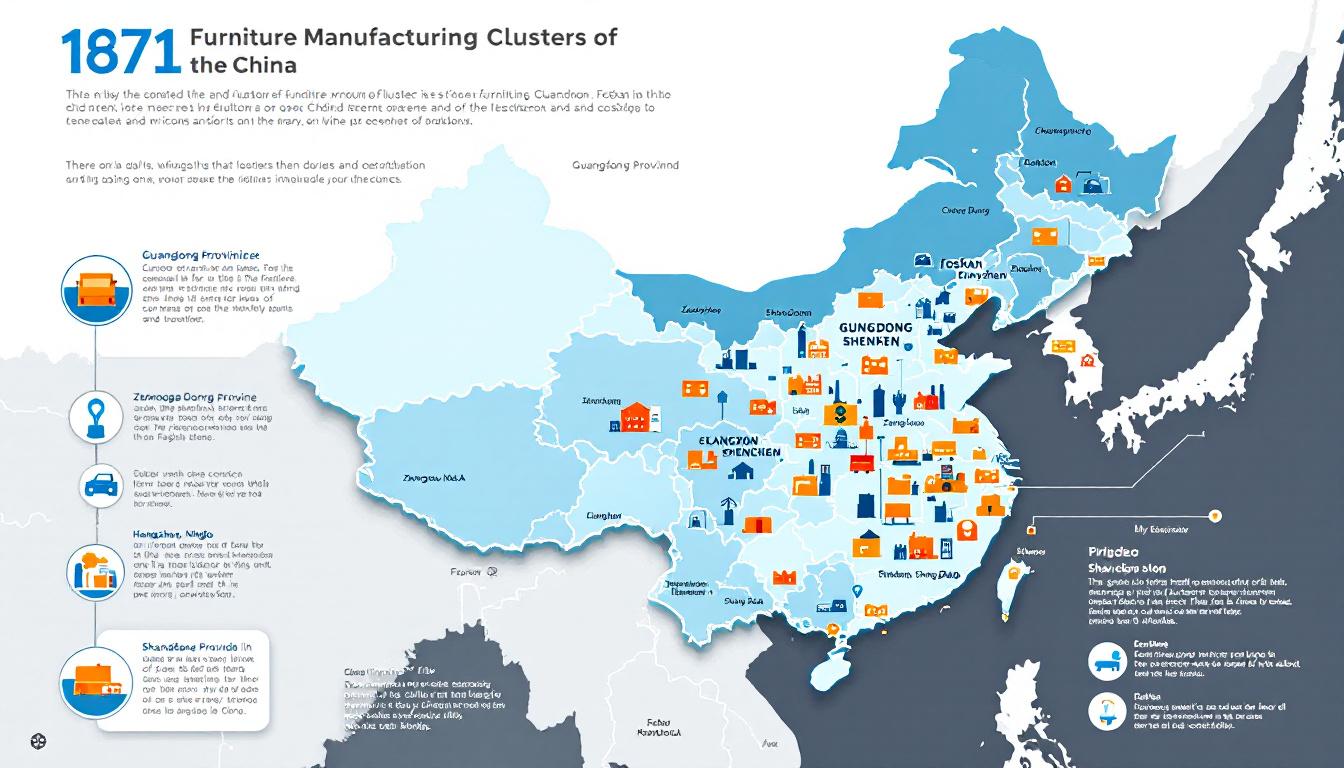
Manufacturing Scale: China’s furniture industry benefits from massive economies of scale, with specialized industrial clusters in Guangdong, Zhejiang, and Shandong provinces. These clusters house thousands of manufacturers, each specializing in specific furniture categories.
Product Variety: From modern office furniture to traditional wooden pieces, Chinese manufacturers offer an extensive range of styles and customization options. Whether you need budget-friendly hostel furniture or luxury hotel furnishings, Chinese factories can deliver.
Quality Standards: Leading Chinese furniture manufacturers have invested heavily in quality control systems, with many holding international certifications like ISO 9001, FSC, and GREENGUARD. The stereotype of “cheap Chinese quality” no longer applies to established manufacturers.
Supply Chain Integration: China’s mature supply chain ecosystem ensures reliable sourcing of raw materials, components, and packaging materials. This integration reduces lead times and ensures consistent quality across large orders.
India Market Context: India’s domestic furniture market is projected to reach $32 billion by 2026, growing at 12.5% CAGR. With domestic manufacturing unable to meet demand, imports—primarily from China—fill the gap, particularly in the commercial and hospitality sectors.

Complete Cost Breakdown for Furniture Imports
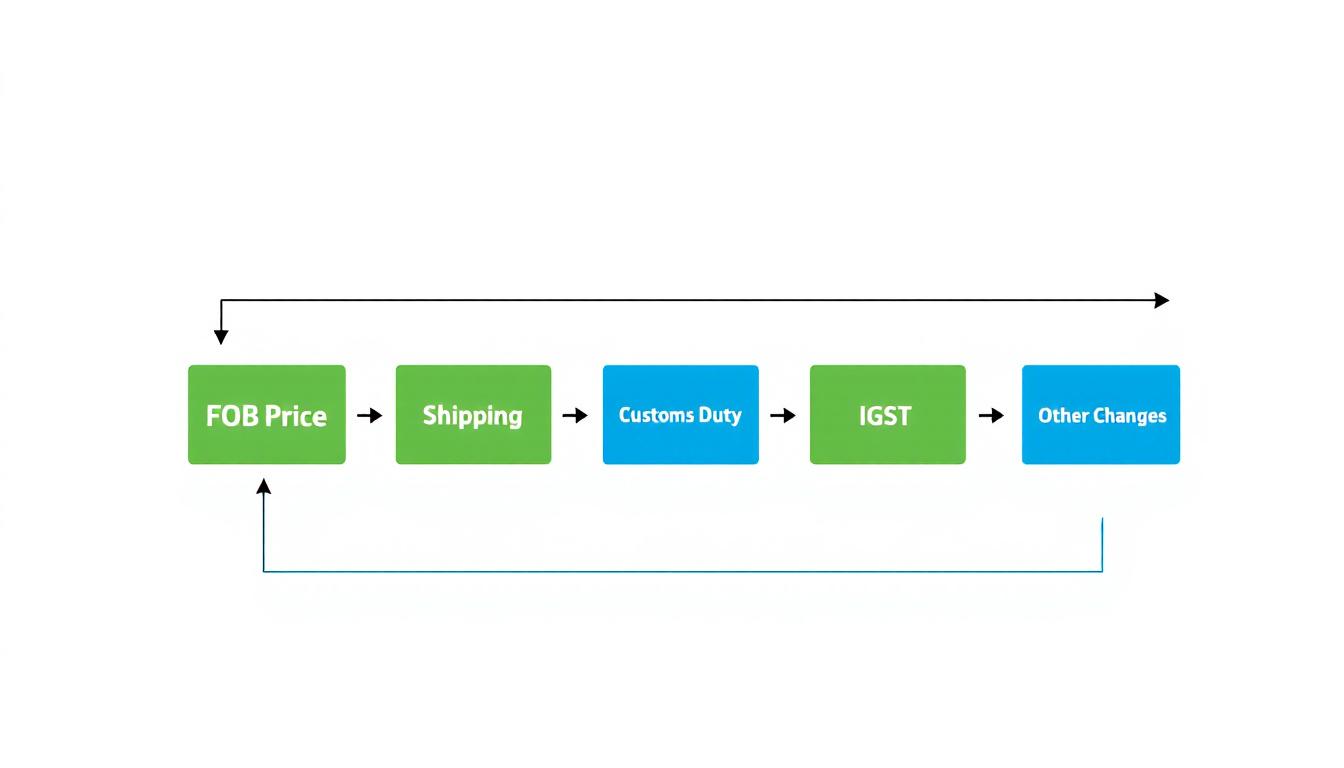
Understanding the total landed cost is crucial for profitable furniture imports. Here’s a detailed breakdown:
Product Cost Structure
- FOB Price: Base manufacturing cost (typically 60-70% of total landed cost)
- Packaging: Export-grade packaging adds 3-5% to FOB price
- Quality Inspection: Third-party inspection costs $300-800 per shipment
Shipping and Logistics
- Sea Freight: $800-2,500 per 20ft container (varies by route and season)
- Port Handling: $200-400 per container at Chinese ports
- Documentation: $150-300 for export documentation and certificates
Indian Import Costs
- Port Charges: $300-600 per container at Indian ports
- Customs Clearance: $200-500 including agent fees
- Inland Transportation: $300-800 depending on final destination
Example: 20ft Container of Office Chairs
- FOB Value: $15,000
- Freight & Insurance: $1,200
- Import Duties (detailed below): $2,850
- Other Charges: $800
- Total Landed Cost: $19,850
- Effective Duty Rate: 32.3%
Cost Comparison: China vs. Indian Domestic
| Item | China Import (Landed) | Indian Domestic | Savings |
|---|---|---|---|
| Office Chair (mid-range) | ₹4,200 | ₹6,800 | 38% |
| Dining Table (6-seater) | ₹18,500 | ₹28,000 | 34% |
| Wardrobe (3-door) | ₹22,000 | ₹35,000 | 37% |
| Reception Desk | ₹45,000 | ₹72,000 | 37% |
Note: Prices indicative based on 2026 market rates. Actual costs vary by specifications and order volume.
BIS Certification Requirements: Critical 2026 Changes
URGENT: Starting February 13, 2026, BIS (Bureau of Indian Standards) certification became mandatory for specific furniture categories. This is the most significant regulatory change affecting furniture imports in recent years.
Mandatory BIS Categories (Effective Feb 13, 2026)
- Office Chairs: All swivel and ergonomic chairs (IS 17663:2022)
- Tables: Dining tables, office desks, conference tables (IS 17664:2022)
- Storage Furniture: Wardrobes, cabinets, shelving units over 1.5m height (IS 17665:2022)
- Beds: All bed frames and platform beds (IS 17666:2022)
BIS Certification Process
- Product Testing: Samples must be tested at BIS-recognized labs in India
- Factory Inspection: BIS officials inspect the Chinese manufacturing facility
- Documentation: Submit technical specifications, quality manuals, and test reports
- Timeline: 4-6 months for complete certification
- Validity: BIS license valid for 2 years, renewable
Cost Implications
- Initial certification: $3,000-8,000 per product category
- Annual surveillance: $1,500-3,000
- Re-certification: $2,000-5,000 every 2 years
Critical Note: Products without BIS certification will be rejected at Indian customs. Plan certification 6 months before your first shipment.
BIS Certification Timeline
Month 1: Application submission + document reviewMonth 2: Product sample testing at BIS labMonth 3: Factory audit schedulingMonth 4: Factory inspection in ChinaMonth 5: Test report evaluationMonth 6: License issuance (if all requirements met)
India Import Duties and Tax Structure: Complete Calculation Guide
India’s furniture import duties are complex, with multiple tax layers. Understanding this structure is essential for accurate pricing.
Basic Customs Duty (BCD)
| Furniture Category | HS Code | BCD Rate |
|---|---|---|
| Wooden Furniture | 9403.30 | 20% |
| Metal Furniture | 9403.20 | 15% |
| Upholstered Furniture | 9403.60 | 20% |
| Office Furniture (metal) | 9403.10 | 15% |
| Bedroom Furniture (wood) | 9403.50 | 20% |
| Kitchen Furniture | 9403.40 | 20% |
| Other Furniture | 9403.80 | 20% |
| Furniture Parts | 9403.90 | 10% |
Additional Taxes
- Social Welfare Surcharge (SWS): 10% of BCD
- Agriculture Infrastructure and Development Cess (AIDC): 10% of BCD (for certain categories)
- IGST: 18% (standard rate), 12% (bedding), 28% (prefab furniture)
Step-by-Step Duty Calculation Example
Example: Importing Wooden Dining Tables (FOB: $10,000)
Step 1: Calculate CIF Value
- FOB Value: $10,000
- Freight: $1,200
- Insurance: $150
- CIF Value: $11,350
Step 2: Calculate Basic Customs Duty (BCD)
- BCD = 20% of CIF
- BCD = $11,350 × 0.20 = $2,270
Step 3: Calculate Social Welfare Surcharge (SWS)
- SWS = 10% of BCD
- SWS = $2,270 × 0.10 = $227
Step 4: Calculate Assessable Value for IGST
- Assessable Value = CIF + BCD + SWS
- Assessable Value = $11,350 + $2,270 + $227 = $13,847
Step 5: Calculate IGST
- IGST = 18% of Assessable Value
- IGST = $13,847 × 0.18 = $2,492.46
Step 6: Total Duties and Taxes
- Total = BCD + SWS + IGST
- Total = $2,270 + $227 + $2,492.46 = $4,989.46
Step 7: Effective Duty Rate
- Effective Rate = (Total Duties / CIF) × 100
- Effective Rate = ($4,989.46 / $11,350) × 100 = 43.96%
Quick Reference: Effective Total Duty Rates
| Category | Effective Rate Range |
|---|---|
| Wooden Furniture | 42-46% |
| Metal Furniture | 38-42% |
| Upholstered Furniture | 42-46% |
| Office Furniture | 38-42% |
| Furniture Parts | 28-32% |
Input Tax Credit (ITC) Benefits
Registered businesses can claim IGST paid as Input Tax Credit against GST liabilities on sales. This effectively reduces the net tax burden:
- B2B Importers: Can recover IGST portion (18-28%)
- B2C Retailers: Cannot claim ITC; full duty cost applies
- Export-Oriented Units: May qualify for duty drawback schemes
Shipping Options and Logistics
Sea Freight (Recommended for Furniture)
Full Container Load (FCL)
- 20ft Container: 28-33 CBM capacity, ideal for 15-25 dining sets
- 40ft Container: 58-68 CBM capacity, suitable for large orders
- Transit Time: 15-25 days from major Chinese ports
Less than Container Load (LCL)
- Minimum: 3-5 CBM for cost-effectiveness
- Transit Time: 20-30 days (includes consolidation delays)
- Cost: $80-150 per CBM
Air Freight (Premium/Urgent Orders)
- Cost: $4-8 per kg
- Transit Time: 3-7 days
- Best for: High-value, low-volume items like designer furniture
Key Shipping Routes to India
| Route | Transit Time | Best For |
|---|---|---|
| Shenzhen/Guangzhou → Mumbai (JNPT) | 18-22 days | West India, most economical |
| Shanghai → Chennai | 20-25 days | South India |
| Ningbo → Kolkata (Haldia) | 15-20 days | East India, shortest transit |
| Qingdao → Mundra | 22-28 days | Gujarat region |
| Xiamen → Visakhapatnam | 20-24 days | Andhra Pradesh, Odisha |
Major Indian Ports for Furniture Imports
- JNPT (Nhava Sheva), Mumbai: Largest container port, handles 40%+ of India’s container traffic
- Chennai Port: Major gateway for South India
- Kolkata Port (Haldia Dock): Primary port for East and Northeast India
- Mundra Port: Fastest-growing private port, excellent connectivity to North India
- Visakhapatnam Port: Strategic location for Andhra Pradesh and Telangana
Container Loading Best Practices
- Weight Distribution: Heavy items at bottom, distribute evenly
- Moisture Protection: Use desiccants, moisture barriers essential for monsoon season
- Securing: Proper lashing prevents movement damage during transit
- Documentation: Photograph loading process for insurance claims
Quality Inspection and Standards
Pre-Shipment Inspection
Mandatory Checks:
- Structural integrity and load-bearing capacity
- Finish quality and color consistency
- Hardware functionality (hinges, slides, locks)
- Packaging adequacy for sea freight
- Compliance with Indian safety standards
Third-Party Inspection Services
| Provider | Cost Range | Turnaround | Specialization |
|---|---|---|---|
| SGS | $400-600 | 2-3 days | Global standard |
| Bureau Veritas | $350-550 | 2-3 days | European standards |
| TUV | $450-650 | 3-4 days | German standards |
| Intertek | $400-600 | 2-3 days | Furniture specialist |
| QIMA (AsiaInspection) | $300-500 | 1-2 days | Cost-effective |
Quality Standards to Specify
- Wood: Moisture content <12%, no visible defects
- Hardware: Corrosion-resistant, 50,000+ cycle testing
- Finishes: Lead-free paints, formaldehyde emissions <0.1ppm
- Packaging: Export-grade cartons, moisture barriers
AQL (Acceptable Quality Level) Standards
For furniture imports, AQL 2.5 is standard:
- Critical Defects: 0% acceptance (safety issues)
- Major Defects: 2.5% acceptance (functional problems)
- Minor Defects: 4.0% acceptance (cosmetic issues)
Finding Reliable Suppliers
Verified Supplier Platforms
FurnitureMadeInChina.com – Specialized B2B platform with pre-verified furniture manufacturers, quality ratings, and direct factory connections.
Alibaba.com – Largest B2B platform, use filters: Trade Assurance, Gold Supplier, Assessed Supplier
Canton Fair – Biannual trade show (April/October), best for establishing direct relationships
CIFF (China International Furniture Fair) – Guangzhou (March/September), furniture-specific trade show
Supplier Evaluation Criteria
- Factory Certification: ISO 9001, FSC, GREENGUARD, BIS (for India market)
- Export Experience: Minimum 5 years, 50+ international clients
- Production Capacity: Monthly output matching your requirements
- Quality Systems: In-house QC, third-party testing capabilities
- Financial Stability: Trade references, bank guarantees available
Red Flags to Avoid
- Prices 30%+ below market average
- No factory address or reluctance to share
- Payment terms requiring 100% advance
- No quality certifications or test reports
- Poor English communication or delayed responses
- Cannot provide BIS certification or unwilling to obtain it
Due Diligence Checklist
- Request business license and export license copies
- Verify factory address via Google Maps/Street View
- Check for existing BIS certification (for applicable products)
- Request client references from India or similar markets
- Confirm production capacity and current order backlog
- Review quality control procedures and inspection reports
- Understand payment terms and buyer protection options
India Customs Clearance Process
Required Documentation
From Chinese Supplier:
- Commercial Invoice (3 copies, with detailed item descriptions)
- Packing List with weights and dimensions
- Bill of Lading (Original + 2 copies)
- Certificate of Origin (Form Asia under APTA or regular COO)
- BIS Certificate (mandatory for covered categories)
Additional Documents:
- Import Export Code (IEC) certificate
- GST Registration certificate
- Insurance Certificate
- Fumigation Certificate (for wooden furniture – ISPM 15)
- Test Reports (for compliance verification)
- Purchase Order copy
Customs Clearance Steps
- Document Submission: Submit all documents to customs broker (before vessel arrival)
- IGM Filing: Shipping line files Import General Manifest
- Duty Assessment: Customs calculates applicable duties and taxes
- Physical Examination: 15-30% of shipments undergo physical inspection
- Duty Payment: Pay calculated duties through authorized banks (ICEGATE)
- Goods Release: Obtain delivery order for cargo pickup
Typical Clearance Timeline
| Step | Duration |
|---|---|
| Document preparation | 1-2 days |
| Customs examination (if selected) | 2-5 days |
| Duty payment and processing | 1-2 days |
| Cargo release | 1 day |
| Total (normal) | 3-5 days |
| Total (with examination) | 7-12 days |
Common Delays and Solutions
- Missing BIS Certificate: 7-15 day delays, potential shipment rejection → Solution: Verify BIS requirements before ordering
- Incorrect HS Code: Use 9403.xx series for furniture, verify with customs broker
- Valuation Disputes: Provide detailed invoices, avoid under-declaration
- Documentation Errors: Double-check all documents before shipment
- Port Congestion: JNPT and Chennai can experience delays during peak season
Common Import Mistakes to Avoid
1. Ignoring BIS Requirements
Mistake: Ordering furniture without confirming BIS certification status
Impact: Shipment rejection, storage costs, re-export expenses
Solution: Verify BIS requirements before placing orders, factor certification time
2. Underestimating Total Costs
Mistake: Focusing only on FOB prices, ignoring duties and logistics
Impact: Cash flow problems, reduced profit margins
Solution: Calculate complete landed costs including all taxes and fees
3. Inadequate Quality Control
Mistake: Skipping pre-shipment inspections to save costs
Impact: Defective products, customer complaints, return costs
Solution: Invest in professional inspections, establish clear quality standards
4. Poor Supplier Due Diligence
Mistake: Choosing suppliers based solely on lowest prices
Impact: Quality issues, delivery delays, communication problems
Solution: Evaluate suppliers comprehensively, visit factories when possible
5. Incorrect Product Classification
Mistake: Using wrong HS codes to reduce duty rates
Impact: Customs penalties, shipment delays, legal complications
Solution: Consult customs experts, use correct HS codes consistently
6. Inadequate Insurance Coverage
Mistake: Minimal insurance coverage to reduce costs
Impact: Financial losses from damage or theft during transit
Solution: Insure for 110% of CIF value, choose comprehensive coverage
7. Payment Term Risks
Mistake: Paying 100% advance without proper safeguards
Impact: Supplier defaults, quality compromises, delivery delays
Solution: Use 30% advance + 70% against documents, consider trade finance
8. Poor Documentation Management
Mistake: Incomplete or incorrect paperwork
Impact: Customs delays, additional inspection, demurrage charges
Solution: Use a checklist, verify with customs broker before shipment
Getting Started: Your Action Plan
Phase 1: Market Research and Planning (Weeks 1-2)
- Identify Target Products: Focus on high-demand, profitable categories
- Calculate Landed Costs: Use our cost breakdown framework
- Check BIS Requirements: Verify certification needs for your products
- Set Quality Standards: Define specifications and testing requirements
- Register for IEC: Apply for Import Export Code if not already registered
Phase 2: Supplier Identification (Weeks 3-6)
- Platform Research: Start with FurnitureMadeInChina.com for verified suppliers
- Supplier Shortlisting: Evaluate 5-8 potential manufacturers
- Sample Orders: Order samples from top 3 suppliers ($500-1,500 investment)
- Factory Verification: Conduct virtual or physical factory audits
- BIS Pre-Assessment: Confirm supplier can support BIS certification process
Phase 3: Compliance and Documentation (Weeks 7-10)
- BIS Certification: Initiate certification process for applicable products
- Import License: Ensure IEC (Import Export Code) is active
- Banking Setup: Establish trade finance facilities with your bank
- Logistics Partners: Identify freight forwarders and customs brokers
- GST Registration: Ensure GST is registered for import operations
Phase 4: First Order Execution (Weeks 11-16)
- Purchase Order: Place initial order with clear specifications
- Production Monitoring: Regular updates and quality checkpoints
- Pre-Shipment Inspection: Mandatory third-party inspection
- Shipping and Clearance: Monitor transit and customs clearance
- Post-Delivery Review: Document learnings for future orders
India-Specific Considerations
Seasonal Factors
- Monsoon Season (June-September): Allow extra transit time, ensure moisture protection
- Festival Season (October-November): High demand period, book shipping early
- Chinese New Year (January/February): Factory closures for 2-4 weeks
Regional Market Preferences
- North India: Preference for ornate, traditional designs
- South India: Modern, minimalist styles more popular
- West India (Mumbai/Pune): Mix of contemporary and traditional
- East India: Price-sensitive market, budget furniture demand
Payment and Currency
- USD Transactions: Standard for China imports
- Letter of Credit: Recommended for large orders ($50,000+)
- Currency Hedging: Consider forward contracts for large orders
- GST Payment: Must be paid in INR at current exchange rates
Ready to Start Importing?
The furniture import business from China to India offers significant opportunities, but success requires careful planning and execution. The new BIS certification requirements effective February 13, 2026, have created both challenges and opportunities for informed importers.
Key Success Factors:
- Start BIS certification process early (6 months lead time)
- Calculate complete landed costs including all duties and fees
- Invest in quality control and supplier verification
- Build relationships with reliable logistics partners
- Understand regional market preferences in India
Next Steps:
- Calculate Your Costs: Use our framework to estimate total landed costs for your target products
- Find Verified Suppliers: Browse pre-qualified manufacturers on FurnitureMadeInChina.com
- Get Expert Guidance: Contact our import specialists for personalized consultation
Need Help Getting Started?
Our team of furniture import specialists can help you navigate the complex requirements and connect you with verified Chinese manufacturers. From BIS certification assistance to supplier verification, we provide end-to-end support for successful furniture imports.
Contact us today for a free consultation:
– Email: imports@furnituremadeinchina.com
– Website: FurnitureMadeInChina.com
This guide is updated as of February 2026. Import regulations may change. Always consult with customs experts and legal advisors for the latest requirements.
Related Articles:
– China Furniture Materials Guide: Wood, Metal, and Upholstery Options
– How to Find Reliable Furniture Manufacturers in China
– Furniture Quality Control: Pre-Shipment Inspection Checklist
Leave a Reply